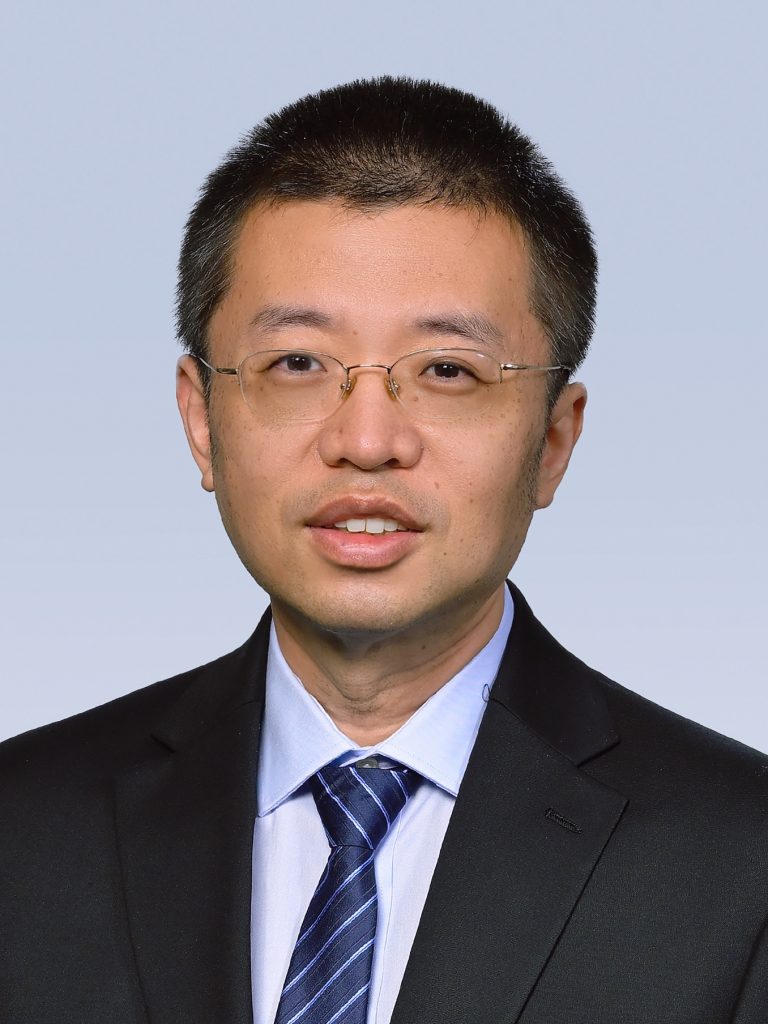

QCBio Distinguished Speaker 2026 (part II): Dr. Qing Nie, Department of Mathematics, Department of Systems Biology, University of California, Irvine
December 1 @ 1:00 pm - 2:00 pm
From Models to AI: Learning the Spatiotemporal Organization of Cells (Part II)
Modern biology faces a fundamental observability barrier: we can measure a biological tissue deeply or watch it evolve, but we cannot do both simultaneously. The complete spatiotemporal trajectory of a biological tissue—from cell states and cell–cell interactions to spatial reorganization and future function—is therefore intrinsically unobservable. Generative modeling and virtual analysis offer new opportunities to elucidate the spatiotemporal organization of cells. In this two-part talk, I will first present modeling approaches from a top-down perspective, using known information about cell–cell communication molecules, cell-fate genes, and their regulators to uncover principles and critical features of multicellular organization. To address the limitations of such models, which depend strongly on prior knowledge of predetermined regulators, I will then focus on a bottom-up perspective that learns the spatiotemporal organization of cells from the rich information contained in single-cell sequencing, spatial transcriptomics, and multi-omics data. These emerging data enable the screening and discovery of unprecedented molecular details underlying multicellular organization. By integrating mathematical models with computational inference, we can uncover spatiotemporal properties of cells and their interactions that are otherwise difficult to observe. Finally, I will present our initial efforts to combine AI with the computational tools and mathematical models we have developed toward learning and predicting the spatiotemporal organization of single cells.